
How we pack vinyl so it arrives flat
Climate control, vinyl-specific mailers and corner protection. What happens to your order between our racks in Málaga and your counter.
2 min read
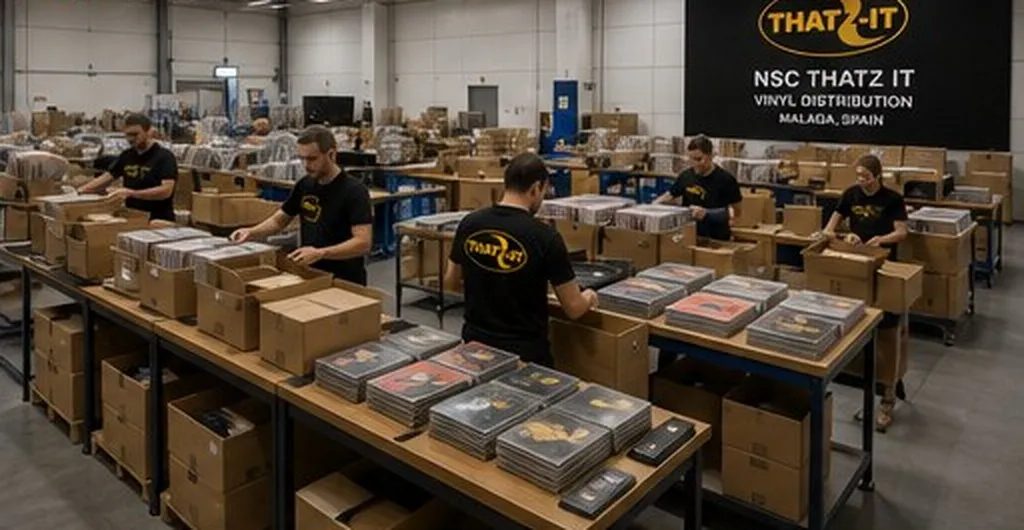
A split seam costs you the sale and costs us the return. Most transport damage to vinyl traces back to a packing decision made earlier in the chain. Here is what we do about it.
Before it is picked: climate
Our main warehouses sit on the Polígono Industrial El Viso in Málaga, and they are climate-controlled end to end. This matters more in southern Spain than it does further north. Heat softens vinyl and lets a record take a set; humidity swells cardboard and takes the crispness out of a sleeve corner.
At the pick: quality control
Every order is checked while it is being picked, because a picker holding a sleeve can see a dinged corner, a seam split or the wrong catalogue number. Once it is inside a sealed mailer nobody can.
Shrink-wrapped stock is checked for pressure marks. Gatefolds are checked for spine crush. Anything questionable goes back and a replacement comes off the shelf.
The packing itself
Three things do most of the work:
- Purpose-made vinyl mailers. A proper LP mailer holds the record at the correct depth so the spine is not carrying the load. Generic book wrap does not.
- Stiffeners. Board on both faces. This is what stops a record arriving with a crease across the sleeve.
- Corner protection. The corners are what a conveyor belt finds first.
For multi-unit orders the records travel upright rather than flat-stacked. A flat stack of eighty LPs puts the entire weight on the bottom sleeve, and that sleeve is somebody’s copy.
Volume orders
Past a certain size, parcels stop making sense. Larger consignments are palletised and stretch-wrapped on our own docks, which means fewer handovers and far fewer hands on the goods.
If something does arrive damaged
Tell us within five working days and send photographs of both the packaging and the record. The packaging matters, because it tells us whether the fault was ours or the carrier’s, and that determines how we fix the problem for the next shipment as well as this one.