
LP, 12", 10" and 7": what each format does
A buying guide to the four vinyl formats we distribute, and how each one behaves on a shop floor in terms of margin, turnover and shelf space.
2 min read
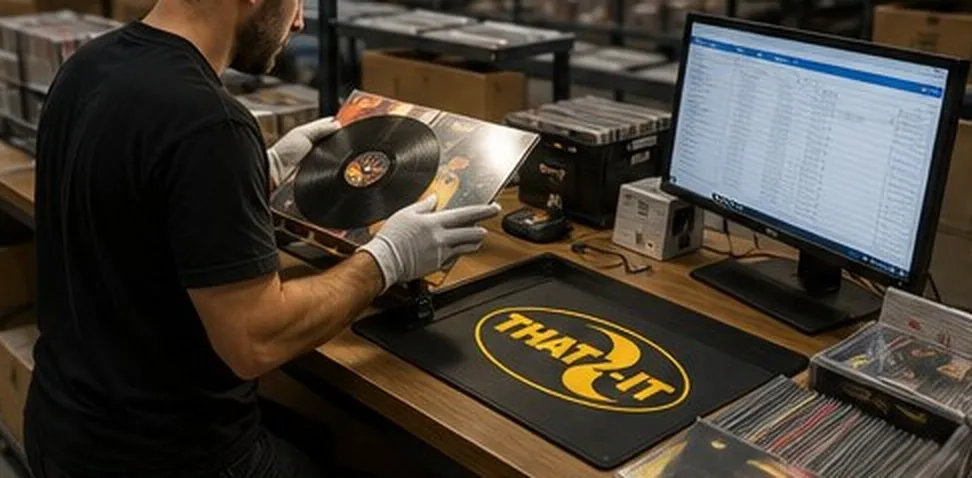
Four formats cover almost everything that moves through our warehouse. They behave very differently at retail, and buying them as if they were interchangeable is the fastest way to end up with dead stock.
LP, the backbone
The twelve-inch album is where most of your turnover lives, and where most of your capital sits. Two things matter when buying it.
First, pressing weight. Standard-weight pressings keep the shelf price accessible; 180g and audiophile editions carry a higher price and a customer who is willing to pay it. Carrying both versions of a catalogue title serves two different buyers.
Second, catalogue depth versus new release. New releases arrive with marketing behind them and sell hardest in the first fortnight, while catalogue sells slowly and indefinitely. A shop stocked entirely on new releases has nothing holding it up in a quiet month.
12-inch, the club format
Maxi singles and EPs are where dance and electronic shops make their name. Short pressings, fast sell-through and a customer who knows exactly what they are looking for. They also take up very little space relative to what they return.
The risk is timing. Club 12-inches are frequently limited, and the allocation window closes before retail demand peaks. If you buy this format seriously, order on announcement rather than on demand.
10-inch, the display format
A smaller run format, often used for reissues, jazz and event releases. Ten-inch pressings work best as a feature rather than a bin, because they catch the eye precisely by being the wrong size. They are frequently coloured, frequently numbered and frequently gone before a reorder lands.
7-inch, the impulse buy
Singles are the cheapest thing in your shop and the easiest thing to say yes to. Soul, punk, reggae and pop all sustain a serious 7-inch trade, and a well-kept singles box gives browsers a reason to stay at the counter.
Margin per unit is small, but margin per square metre is among the best in the shop.
Buying across the four
A rough rule that holds up: let LPs carry the turnover, let 12-inches carry the specialism, let 10-inches carry the window and let 7-inches carry the browse. If you want the stock figures for any of these formats in your genres, ask us.